The London Fryscraper: When Design Coordination Misses Environmental Clashes
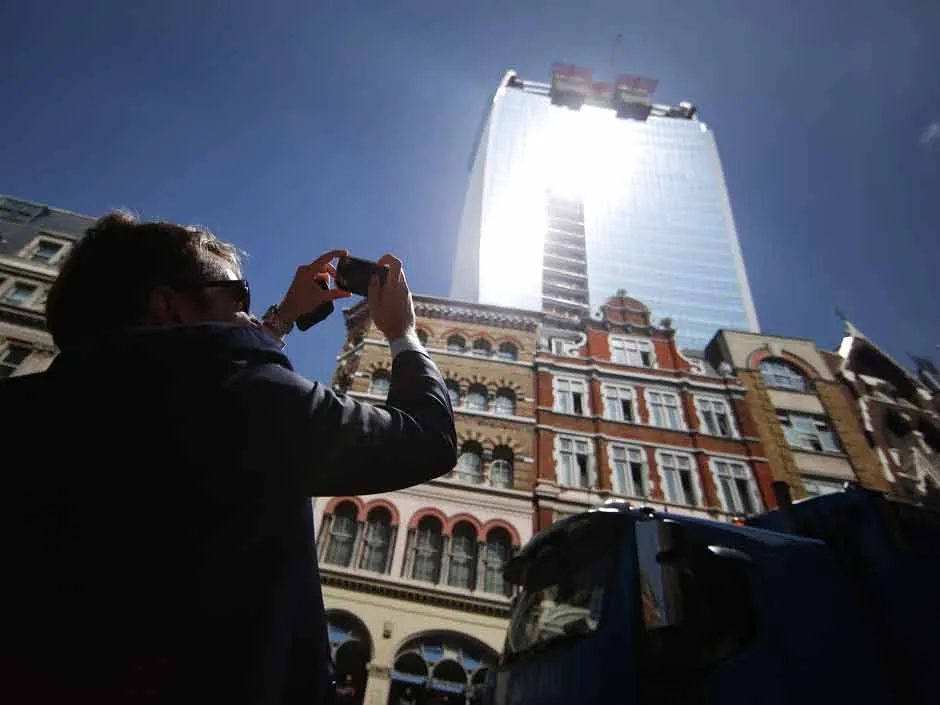
In 2013, the skyscraper at 20 Fenchurch Street in London — nicknamed the "Walkie-Talkie" — earned a more alarming name: the Fryscraper. The building's distinctive concave glass facade, designed to maximize upper-floor area, acted like a giant magnifying glass. For two hours each day, it focused a beam of concentrated sunlight onto the street below, reaching temperatures of 117 degrees Celsius. The beam melted body panels on a parked Jaguar, scorched doormats at nearby businesses, and was hot enough for a reporter to fry an egg on the sidewalk. The building eventually required permanent sunshade installations to mitigate the hazard. This billion-dollar design coordination failure illustrates a fundamental truth about construction: when cross-discipline review misses environmental interactions, the consequences reach far beyond the drawings.
Why Cross-Discipline Design Clashes Are Hard to Catch
Most engineering drawing QAQC focuses on what appears on the drawings — dimensions, annotations, code compliance, and coordination between mechanical, electrical, plumbing, and structural systems. These are critical checks, and MEP drawing errors caught during construction document review prevent significant rework. But some of the most consequential design failures involve interactions that no single drawing sheet reveals: how a facade reflects solar energy, how wind patterns change around a building's geometry, or how acoustic properties shift when mechanical systems operate at full load.
The Walkie-Talkie's solar reflection problem existed at the intersection of architectural design, facade engineering, and environmental analysis. The concave shape was an architectural decision. The glass specification was a facade engineering decision. The solar reflection analysis — if it happened at all — fell into the gap between disciplines. In the AEC industry, identifying environmental clashes like solar reflections, wind tunneling, and thermal bridging remains one of the most challenging aspects of design coordination because no single discipline owns the review.
How Teams Approach Environmental Review Today
Environmental impact analysis on building projects typically involves specialized consultants who run simulations for wind, solar, and thermal performance. These studies are expensive, time-consuming, and usually performed late in the design process — often after the fundamental building geometry is locked. When the analysis reveals a problem, the design is already too far along for easy correction.
For standard construction drawing review, engineers focus on what they can verify from the documents: AI for structural engineering teams check load paths and connections, AI for MEP engineering teams verify equipment schedules and duct sizing, and AI for civil engineering teams validate grading and drainage. But the interaction between a building's form and its environment — the exact failure mode that created the Fryscraper — sits outside the scope of traditional engineering design QA because it requires cross-referencing design intent against physical behavior that the drawings do not explicitly show.
How AI Enables Cross-Discipline Design Coordination
Design coordination AI is expanding the scope of what automated design review can catch by connecting information across disciplines that traditionally operate in silos:
Multi-Discipline Drawing Analysis
AI systems that parse complex construction drawings can automatically cross-reference designs across structural, architectural, MEP, and civil disciplines simultaneously. Engineering drawing validation that operates across all disciplines at once identifies coordination issues — like conflicting facade specifications and environmental standards — that discipline-specific reviews miss. Automated plan review that considers how decisions in one discipline affect outcomes in another is fundamentally different from the siloed review process that allowed the Fryscraper problem to reach construction.
Early Detection of Environmental Interactions
Modern AI can flag potential environmental concerns earlier in the design process by identifying geometric and material combinations that warrant further analysis. Rather than waiting for a specialist consultant to run a full simulation, design coordination AI can identify that a concave glass facade facing a particular orientation may concentrate solar energy and flag it for review. This early warning system ensures that the right questions get asked before the design is locked — reducing the risk of construction rework and costly post-construction remediation.
The Fryscraper: A Coordination Failure Worth Studying
The Walkie-Talkie's "death ray" was not caused by incompetent engineers. It was caused by a gap between disciplines — an architectural form decision that created a physics problem which no single engineering team was responsible for reviewing. The post-construction sunshade installation cost millions and permanently altered the building's appearance. In an era where AI for construction can parse drawing sets across all disciplines simultaneously and flag cross-discipline coordination issues before they reach the field, the Fryscraper serves as a case study in what happens when construction drawing review operates in silos. The lesson is clear: the most expensive design errors are the ones that fall between disciplines, and automated design review that connects those disciplines is how the industry prevents the next Fryscraper.
Conclusion
The London Fryscraper is an extreme example of what happens when design coordination misses cross-discipline interactions. But the underlying problem — review processes that operate in silos while building systems interact across every boundary — affects every construction project. Design coordination AI, automated design review, and engineering drawing QAQC tools that analyze drawings across all disciplines simultaneously are closing the gap that created the Fryscraper and that continues to generate construction rework on projects worldwide. The errors are not always as dramatic as melting cars. But the principle is the same: what one discipline decides, another discipline must review.
Want to see how cross-discipline AI review catches what manual QA misses?
Book a Demo